ServicesChlorine & Chloramine Removal
Chlorine & Chloramine Removal in Pinellas Park
A pool-like odor in a hot shower, coffee with a faint chemical edge, skin that feels tight after bathing. Those usually trace back to the disinfectant in city water. We remove it where the main line enters your home, with carbon sized to your flow and fittings laid out for easy service.
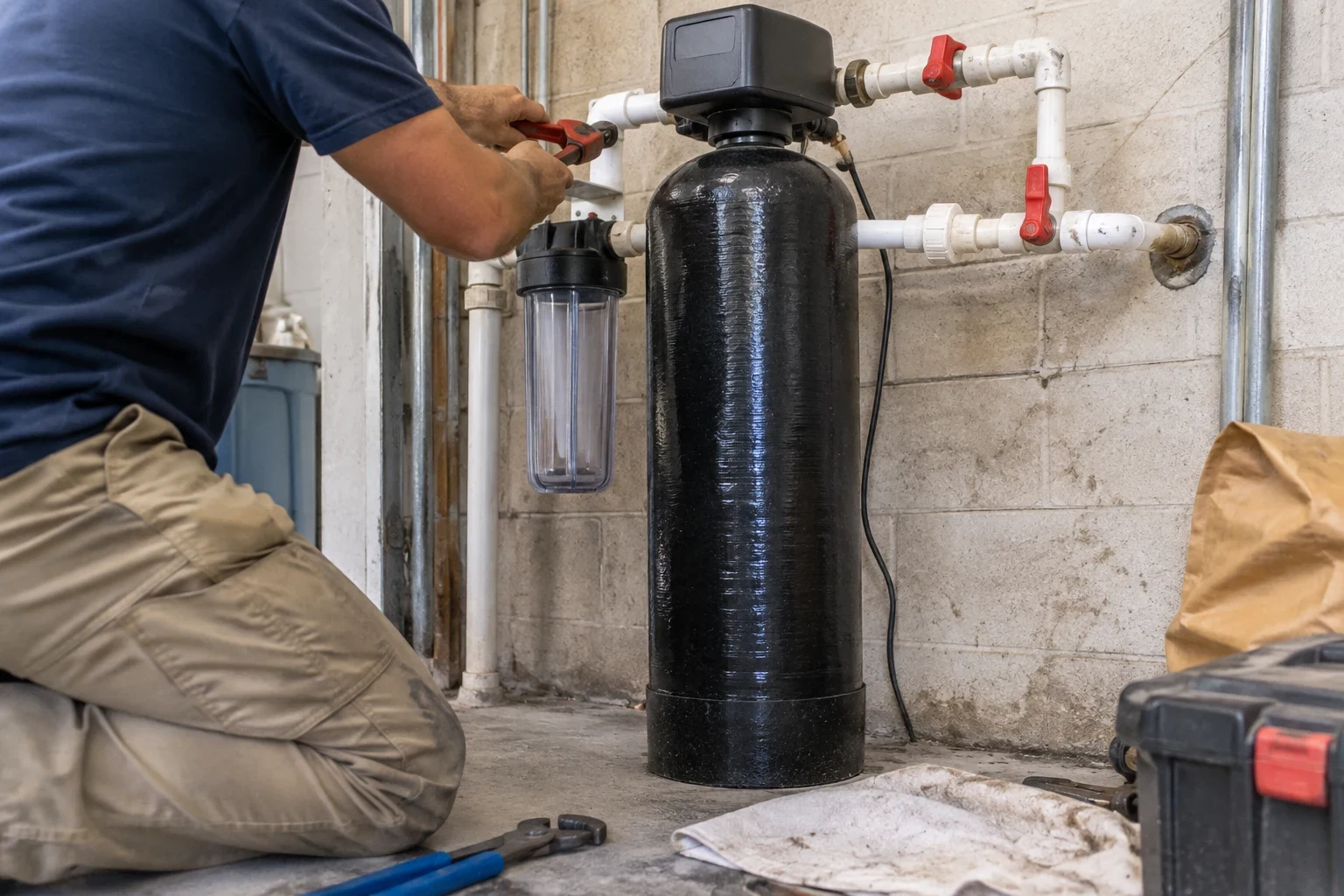
What this system does for your home
City water is disinfected so it stays safe on the way to you. That is a good thing, but once it reaches your home the job is done, and the leftover chlorine or chloramine is what you taste in coffee, smell in a hot shower and notice on dry hair. A whole-home carbon system removes it before the water reaches any fixture.
Chlorine and chloramine are not the same problem. Chlorine comes out easily with standard activated carbon. Chloramine, a chlorine and ammonia compound many utilities now use, is more stubborn. It needs catalytic carbon and more time in contact with the media, which means a correctly sized tank. An undersized filter can seem fine for a few months and then let chloramine slip through.
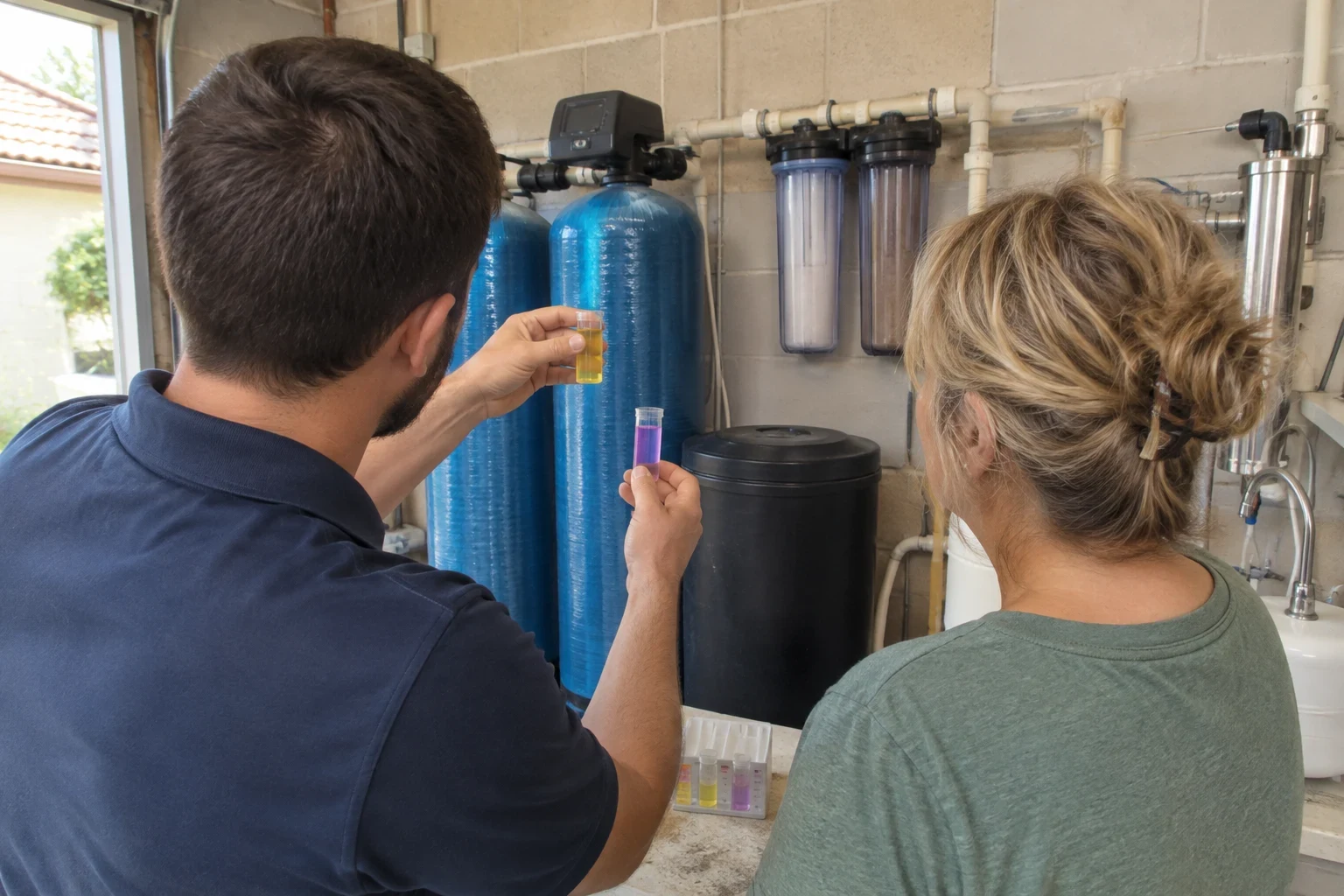
That sizing and setup is where we spend our care. Before recommending anything we look at your utility's published water quality report with you to see which disinfectant you get, then match the media and tank to your plumbing and how much water your home uses.
What the installation includes
- Media matched to your disinfectant
- Chlorine gets standard carbon, chloramine gets catalytic carbon. We explain which one your water calls for and the reason behind it.
- A tank sized for contact time
- We pick the tank based on the most water your home uses at once, not the smallest model that will squeeze in. With two showers and the washer going together, the water still needs enough time in the carbon to come out clean.
- Sediment prefilter
- Ahead of the carbon sits a sediment stage that traps grit, so the media doesn't clog early and keeps working longer.
- Bypass loop with reachable shutoffs
- We plumb in a bypass so your home still has water while the system is being serviced. Shutoff handles go where you can get to them without moving shelves or crawling behind the water heater.
- Careful tie-in to your main line
- Fittings are chosen for your pipe type, the electrical ground bond is restored whenever we cut metal pipe, and the tank is supported so it puts no strain on the plumbing. Outdoor systems get a cover, since Florida sun weakens plastic housings over time.
Signs chlorine or chloramine is bothering you
A pool smell from the tap
The odor is strongest from hot water, especially in the shower.
Coffee and tea taste off
A flat, chemical note in drinks often points to disinfectant, not your coffee.
Dry skin and brittle hair
Many people notice tight skin or faded color-treated hair after showering.
Your current filter stopped working
If an older carbon filter helped at first and the taste came back fast, it may have been built for chlorine while your water carries chloramine. Our water softener and filtration system replacement service covers swapping out equipment that is undersized or worn.
You keep fish or a garden pond
Chloramine is harmful to fish and does not gas off by letting water sit, so pet owners often want it gone at the source.
How the work goes
- 1
A conversation by phone
You tell us what you notice, how many people live in your home and how many bathrooms you have. We go over your utility's water quality report together and give you a straight answer on which system fits.
- 2
Checking the main line
We find where water enters your home, note the pipe material and size, and confirm there's room and drainage for the tanks. Then you get your quote by phone with each part listed.
- 3
Installation day
Once the water is shut off, we cut in the sediment filter, carbon tank and bypass, then pressure-test every joint. Your water is off for only part of the visit, and we tell you how long ahead of time.
- 4
Rinse, test and hand-off
We rinse the fresh media until the water comes out clear and compare pressure on the inlet and outlet sides. Before we leave, we show you how the bypass and shutoffs work and tidy up the space.
What sets the price of your system
We don't quote a flat number, because the right system depends on your water and your household. Most of the price comes down to which disinfectant your utility uses and how much water your home draws at its busiest moment. You'll hear a plain reason for every line on your quote.
- Chlorine or chloramine
- Chloramine calls for catalytic carbon, which costs more than standard carbon. It also usually needs a larger tank so the water stays in the media long enough.
- Household size and flow
- More bathrooms and more people raise peak flow. Higher flow means more media in the tank, so water still gets enough contact time with the carbon.
- Where the main line is
- A main line that's easy to reach near a hose bib keeps the work simple. Rerouting a line, or adding a pad and cover for an outdoor spot, takes more time and materials.
- Pipe material and condition
- Older or mixed piping can need extra fittings or a short new section so the connection holds up for years.
Questions about chlorine and chloramine removal
Something not covered here? (727) 382-3158
Will a regular carbon filter remove chloramine?
Not well, and not for long. Standard carbon handles chlorine nicely but is slow against chloramine. Catalytic carbon is made for chloramine, and the tank still has to be big enough that water spends real time in the media.
Is it safe to remove the disinfectant for the whole house?
For homes on city water, yes. The disinfectant has done its work by the time water reaches your home, and household water moves through the pipes quickly. If a guest bath or outdoor spigot goes unused for weeks, run it for a minute first.
Should I get reverse osmosis instead?
They solve different problems. Reverse osmosis serves a single sink for drinking and cooking water and removes far more than disinfectant, while a carbon system treats every shower and faucet. Many homes pair the two, with reverse osmosis at the kitchen sink.
How often does the carbon need replacing?
It depends on your water use and the tank size. A properly sized catalytic carbon tank usually goes years between media changes, while the sediment prefilter is changed more often. After installation we stay available for maintenance, filter changes and any service your system needs down the road.
Will this lower my water pressure?
With the right size system, any drop is too small to notice in daily use. Weak showers after a filter install usually mean the tank is too small for the house, which is why we size for your busiest times.
Ready for water that tastes like water
Give us a ring and describe what bothers you about your water, plus a little about where your pipes come in. We'll tell you which setup makes sense and walk you through an itemized quote.