ServicesWell Water Treatment
Well Water Treatment in Pinellas Park
Rotten-egg odor, orange rings in the toilet and crusty white faucets can all be solved. We size the treatment to what is actually in your water and to your pump's flow, then plumb it with care so it keeps working for years.
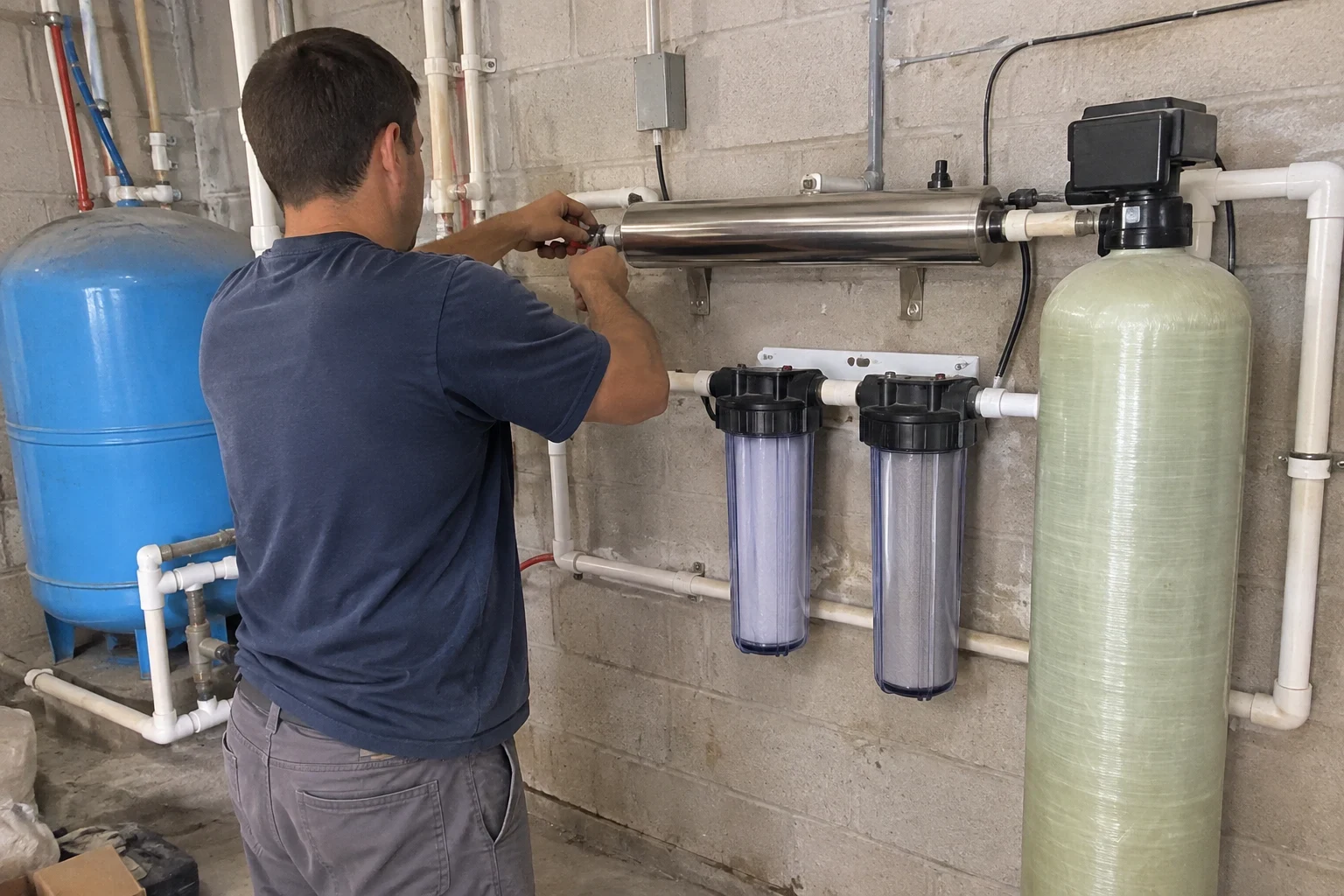
Well water that behaves like city water
A private well gives you water the utility never touches. That is often the appeal, but it also means nothing has been done to it before it reaches your kitchen. Many wells here carry dissolved iron, hydrogen sulfide or hard minerals picked up from limestone, and each one causes a different problem in your home.
Our well water treatment usually pairs a sediment stage with an oxidizing filter for iron and sulfur, and adds softening or carbon only when the water calls for it. We don't stack equipment you don't need.
Most of what decides how long a well system lasts happens during installation. Is the backwash rate matched to what your pump can deliver? Is there a real bypass, a proper air gap on the drain and solid pipe support? We take our time on those details because a filter that can't clean itself fails early, no matter how good the tank is.
What your well treatment install includes
Pump flow check
Before we size anything, we measure how many gallons per minute your well pump actually delivers. Backwashing filters need a certain flow to rinse properly, and an undersized pump is the most common reason well systems clog.
Iron and sulfur filtration
For rotten-egg odor and rust staining, we typically use an air-injection or oxidizing filter that converts dissolved iron and sulfur into particles it can trap and flush away on a schedule.
Sediment protection
A sediment stage ahead of the main filter catches sand and grit so the control valve and media aren't worn down by it.
Clean, serviceable plumbing
We install a three-valve bypass, unions for easy removal and properly supported pipe runs. Your water can stay on during future service, and parts come out without cutting pipe.
Correct drain routing
The backwash line gets a code-compliant air gap and a sensible path, so wastewater never siphons back and the drain doesn't overflow during a rinse cycle.
Setup and walkthrough
We program the valve for your household's usage, run a full backwash while you watch and show you the bypass and any settings you might need.
Signs your well water needs treatment
A sulfur or rotten-egg smell
That odor comes from hydrogen sulfide. It is often strongest with hot water or first thing in the morning.
Orange or brown stains
Rust rings in toilets, discolored laundry and orange streaks on walls or the driveway from sprinklers all point to iron in the water.
White scale on fixtures
Crusty faucets, spotty glasses and a water heater that pops or rumbles suggest hard water building up inside your plumbing.
Black slime in tanks or drains
Dark residue inside the toilet tank can come from iron or sulfur bacteria feeding on what's in the water.
An old system that no longer keeps up
If stains and smell are creeping back despite existing equipment, the media may be spent or the system may have been sized wrong from the start. Our water softener and filtration system replacement page covers that situation.
From your first call to clear water
- 1
Start with a phone chat
Describe what you notice, from smell to stains, and let us know the age of your well and pump plus any equipment already installed. We'll tell you plainly whether treatment is likely to solve it.
- 2
We see the setup in person
At the visit we measure pump flow and look at the pressure tank, the open space and where a drain line can go. Then we lay out what we'd install and the reason for each piece.
- 3
The install itself
Most jobs wrap up within part of a day. Water stays on except when we truly need it off, floors and surfaces get covered where we work, and everything is plumbed with a bypass. We clean up before we leave.
- 4
First backwash and beyond
We run the opening backwash, watch the water clear and show you how to care for the system. Our ongoing customer support for maintenance, filter replacements, and service needs is there whenever you need it.
What affects the cost of well water treatment
Well systems vary more than city water systems because every well is different. Your price depends on what has to come out of the water and how much work the plumbing needs. We give you the full picture by phone and in person before any work begins.
- What's in your water
- Iron alone needs less equipment than iron plus sulfur plus hardness. Each added problem can mean another stage.
- Pump output and household use
- A low-flow pump may need a different filter design, and a large family needs a system sized for higher daily demand.
- Installation location
- Equipment beside the pressure tank with a nearby drain is simpler. Long runs, tight spaces or outdoor installs that need protection from sun and weather add labor.
- Condition of existing plumbing
- Corroded fittings, an old pressure tank or failing equipment that has to be removed can add to the job.
Well water treatment questions
Something not covered here? (727) 382-3158
Will adding treatment make my showers weaker?
It shouldn't if the equipment fits your well. Noticeable pressure loss almost always traces back to a control valve that's too small or media that has clogged. We measure your pump's output before choosing anything, so the valve and tank can pass the water your household uses.
Can you really get rid of the sulfur smell?
Usually, yes. An oxidizing filter changes hydrogen sulfide into a form it can trap and flush away. If the odor only shows up when you run hot water, we'll also check your water heater's anode rod, since it can react with sulfur and cause the smell on its own.
Do I still need reverse osmosis for drinking water?
Not in every case. A whole-house well system handles odor, staining and scale at every tap in your home. Some families still add an under-sink reverse osmosis unit for the water they drink and cook with, and we'll tell you honestly whether that extra step is worth it for you.
How much upkeep does a well system need?
Backwashing filters rinse themselves on a timer, so there's very little to do day to day. You'll check the sediment stage now and then and, if a softener is part of the setup, keep salt in the brine tank. If you'd rather not keep track of it, we stay with you after the install for maintenance visits, filter changes and any service the system needs down the road.
Can you treat my irrigation well too?
Yes. Sprinkler wells that leave orange streaks on your walls, walkways or driveway can be treated as well. The equipment is often simpler than a drinking water setup, but it still has to be matched to the pump's flow to rinse properly.
Ready for water that doesn't stain or smell?
Tell us what your well water is doing, and we'll explain what will fix it and what the job involves. You can get your quote by phone.