ServicesWhole-Home Filtration
Whole-Home Filtration in Pinellas Park
One treatment tank, placed where water first enters your home, means every shower, sink and appliance gets the same filtered supply. We size it to your plumbing and fit it with unions and a bypass, so a filter change years from now takes minutes instead of an afternoon of cutting pipe.
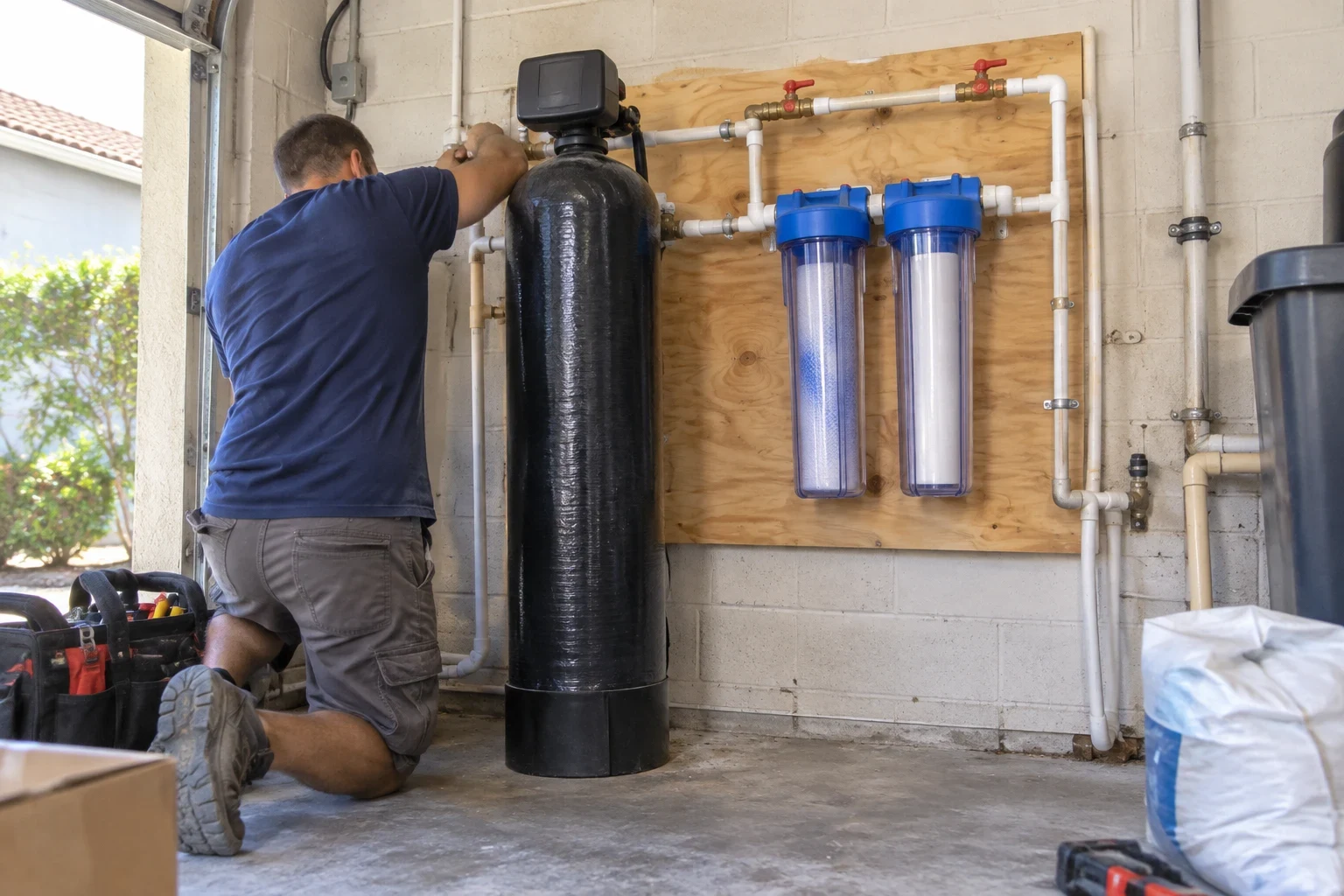
Treated water at the shower, the sink and the washer
A whole-home system, also called a point-of-entry filter, is a tank of filter media placed on your main supply line so water is treated as soon as it comes into the house. For most people we work with, the reason is simple: they're tired of the chlorine or chloramine taste and smell that comes with city water. Activated carbon takes care of chlorine, and catalytic carbon is the stronger choice if your utility treats with chloramine.
The tank is really the easy part. What decides how many good years you get is everything around it: a bypass you can reach without a ladder, a sediment prefilter that keeps grit off the carbon, unions in place of soldered joints, and a level, shaded pad if the tank has to live outside in the Florida sun. We take our time on those details.
If better drinking water at one sink is all you're after, a reverse osmosis unit might suit you better. We'll give you a straight answer about which fits your home, and now and then that answer is both.
What goes into a careful installation
- A three-valve bypass loop
- We build a bypass so you can isolate the filter and still have water in the house. If the tank ever needs service, you turn three handles instead of shutting off the whole home.
- Sediment prefilter
- Sand and pipe scale clog carbon early. A sediment cartridge ahead of the main tank catches that grit and is cheap and quick to change.
- Pressure gauges before and after
- Two gauges show you at a glance when the prefilter is loading up. A growing gap between the readings tells you it is time for a cartridge, long before you notice weak showers.
- Unions and a ground bonding jumper
- Threaded unions let the tank come out without cutting pipe. Where we add plastic fittings into metal pipe, we install a bonding jumper so your home's electrical ground stays continuous.
- Media flushed before you use it
- New carbon releases fine dust. We rinse the bed to drain until it runs clear, so the first glass from your kitchen tap is clean.
Signs a whole-home filter makes sense for you
The shower smells like a pool
Chlorine and chloramine are most noticeable in hot, steamy water. A pitcher on the counter does nothing for the bathroom.
You filter water in three places already
A fridge filter, a faucet attachment and a shower head filter all need their own cartridges. One system on the main line replaces that juggling.
Grit in aerators and shower heads
Small particles that collect in faucet screens point to sediment in the line, which a prefilter is built to catch.
Coffee and ice taste off
If the taste problem shows up in everything made with tap water, treating the water once at the main line is usually the cleaner fix.
How a whole-home install goes
- 1
A conversation by phone
Tell us what bothers you about the water, how many bathrooms your home has and where you think the main line enters. We explain the options in plain terms before anyone visits.
- 2
A look at your plumbing
We check the main shutoff, the pipe size and material, and the places a tank could sit. Around here the main often enters at a garage wall or outside the house, and that spot shapes the rest of the plan.
- 3
A line-by-line written estimate
The tank, the media, the prefilter and the plumbing labor each get their own line. Nothing is added on install day unless you've said yes to it first.
- 4
Plumbing, flushing and testing
The water is shut off for a few hours while we build the bypass and set the tank. We cover the work area, rinse the new media until the drain runs clear and pressure-test every joint.
- 5
A walk-through, then cleanup
We show you the bypass valves, the gauges and how to pull the prefilter cartridge, then take away old pipe and packaging. Keep our number for filter changes and service down the road.
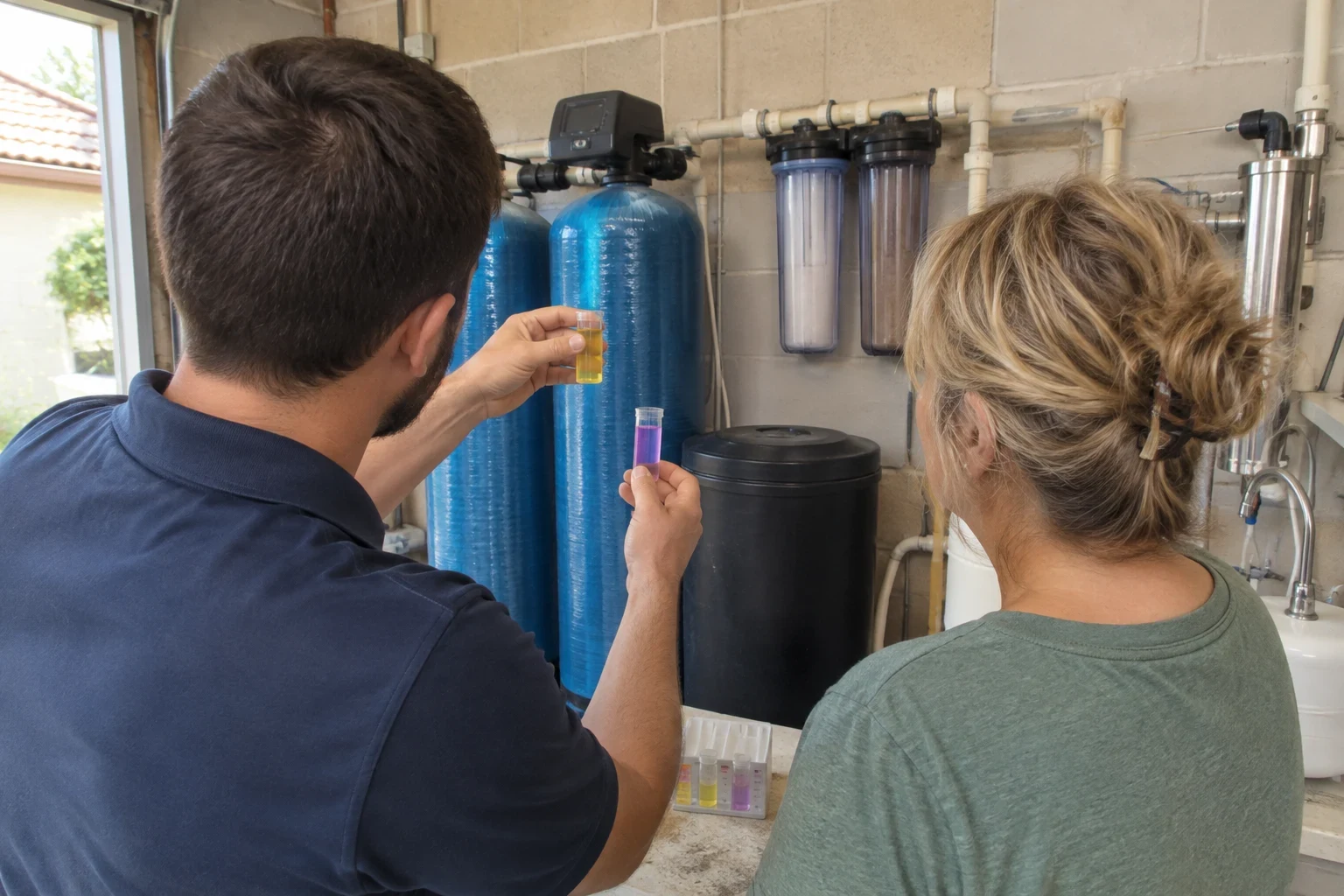
What shapes the price of a whole-home system
No two installs are quite alike, even in houses built the same year. Your price depends on how much water your household pulls at one time, what the filter has to take out, and how much pipe work it takes to set the tank in a good spot. Every one of those pieces shows up as its own line on your written estimate.
- Tank size and flow rate
- More bathrooms means more water moving at once. A four-bath home needs a bigger tank than a two-bath house, or pressure sags when the dishwasher and two showers run together.
- The media inside
- Standard carbon is fine for chlorine. Catalytic carbon, the right pick for chloramine, costs more up front but holds up much longer against it.
- Where it goes and the pipe it meets
- An open garage wall beside the main line is the simplest case. An outdoor install adds a level pad and a sun cover, and copper or aging galvanized pipe can mean extra fittings and labor.
- Extras you choose
- Adding a sediment prefilter, a pair of pressure gauges, or a water softener alongside the filter each changes the parts list.
Whole-home filtration questions
Something not covered here? (727) 382-3158
Am I going to lose water pressure with a filter on the main line?
Not if the tank is sized for your house. Pressure trouble almost always traces back to a tank that's too small or a prefilter cartridge that's packed with grit. We size by the number of fixtures you have and add gauges, so you can see a cartridge loading up before the showers feel it.
How much upkeep does the system need?
Plan on swapping the sediment cartridge a few times a year, more often if your line carries a lot of grit. The carbon in the main tank goes much longer between changes. Once the system is in, we're still here for maintenance, filter replacements and any service it needs.
Is it OK to put the tank outdoors?
It is, and for plenty of local homes outside is the most sensible place. We set the tank on a level pad and shield it from direct sun, because UV slowly weakens plastic housings and valve bodies.
Will it take out chloramine, or only chlorine?
Both, if the media matches the job. Catalytic carbon is built for chloramine and needs more contact time with the water, so we size the tank with that in mind. Our Chlorine & Chloramine Removal page explains more.
Should I add reverse osmosis for drinking water too?
That depends on what you want from your kitchen tap. A whole-home filter fixes taste and smell throughout the house. Reverse osmosis treats water more thoroughly at a single sink for drinking and cooking, and some families decide to have both.
Let's plan a filter that holds up for years
Give us a quick picture of your plumbing and the taste or smell that's bothering you. We'll cover tank size, where it should sit and the install details that keep it running well.