ServicesWater Softeners
Water Softeners in Pinellas Park
Hard water leaves white crust on fixtures, spots on dishes and scale inside your water heater. We install water softeners sized to your household and plumbed carefully, so the system regenerates when it should and your home gets soft water day after day.
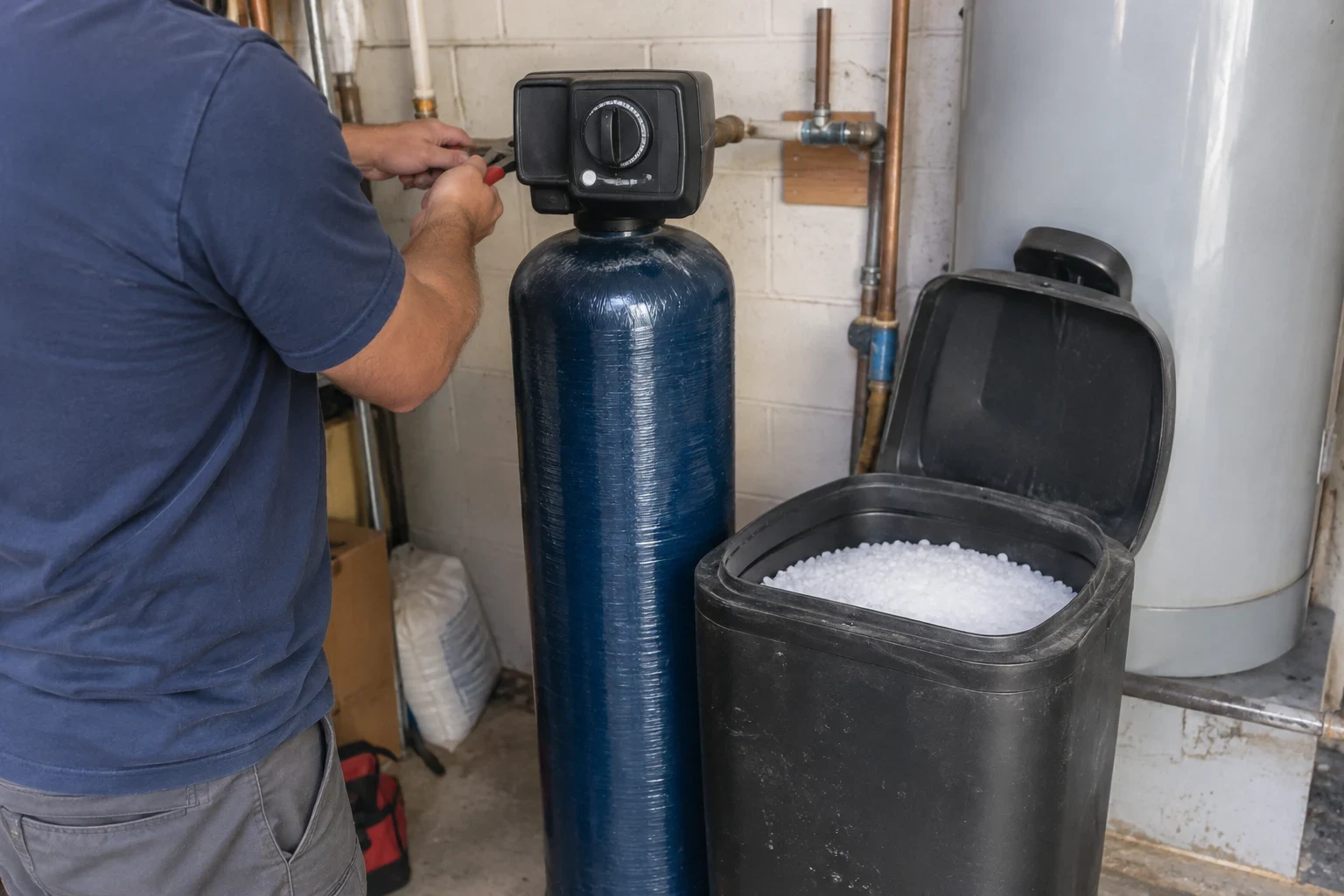
When a softener is the right fit
A softener holds a tank filled with small resin beads. As water passes over them, the beads grab calcium and magnesium, the minerals that make water hard, and release a little sodium or potassium in their place. The water that leaves the tank rinses clean, lathers with less soap and stops leaving scale in your pipes, faucets and appliances.
Some homes don't need one, and we will be honest about that. If chlorine taste or smell is what bothers you, whole-home filtration or our chlorine and chloramine removal service may fix it with no softener at all. If you only care about the water you drink, a reverse osmosis system under the kitchen sink might be the smarter pick.
When a softener is the answer, its lifespan depends on small installation choices: correct sizing, a protected drain line, a bypass that works and a brine tank sitting level. Those are the details we slow down for.
What your softener installation includes
Sizing to your household
We factor in how many people live in your home, how many bathrooms you have and how much water you use, along with the hardness figure from your utility's yearly water quality report. An undersized softener regenerates over and over and wears out early. An oversized one can leave resin sitting idle.
A proper bypass valve
Each softener goes in with a bypass valve, which lets us take the unit offline for service while the rest of your home keeps running water. We also check whether hose bibs and irrigation are better left on untreated water, since that cuts salt use.
Drain line with an air gap
We fasten the regeneration drain line in place and end it at an air gap, so wastewater has no path back into the softener. It is a small part, and leaving it out is a shortcut we run into often.
Brine tank set level and protected
The brine tank goes on a flat, solid base, and its overflow line runs to a drain. For garage or outdoor setups, we keep it out of direct sun where possible, because heat and UV age tanks and fittings faster.
Setup and a quick lesson
The control valve gets set to match your water's hardness and the number of people at home. We then put the system through one complete regeneration cycle and check every joint for leaks. Before leaving, we show you how to add salt, switch the bypass and read the display.
Signs your home could use softer water
White crust on faucets and shower heads
That chalky ring around aerators and spray holes is mineral scale. With hard water, it returns a few weeks after you scrub it off.
Cloudy glassware
Even with rinse aid, glasses leave the dishwasher hazy and spotted. Softened water rinses off without leaving minerals behind.
Soap that won't lather
You need extra shampoo and body wash to get any foam, and your skin feels coated after a shower.
Popping or rumbling water heater
Scale collects on the bottom of a tank water heater and crackles as the burner or element heats it. Left alone, it lowers efficiency and shortens the heater's life.
Stiff, dingy laundry
Minerals trap detergent in the fibers, so towels turn scratchy and whites go gray faster.
How a softener install goes
- 1
A phone conversation first
You describe what you're noticing at the faucet and how your household uses water. Together we sort out whether a softener is the likely fix or whether a different system would serve you better.
- 2
A look at your plumbing
We find where your main line comes in, where a drain is close by and where the system can sit on a level spot. That sets the layout before any equipment arrives.
- 3
Install day
Drop cloths go down around the work area first. Then we turn off your main supply, plumb in the bypass and the softener, and route the drain and overflow lines. The job usually wraps up within a few hours, and the water only needs to stay shut off during the plumbing portion.
- 4
Startup and cleanup
We flush the new system, run a regeneration and inspect each joint for drips. The work area gets cleaned, and you get a walkthrough before we head out.
What affects the cost of a softener
The price of a softener comes from your household and your plumbing, not a fixed package. We walk you through each part of the job on the phone and again at our visit, so every line makes sense to you. If something about your setup changes the plan, you hear about it before any work starts.
- Capacity
- More people and harder water need more resin. A larger tank costs more at the start but goes longer between regenerations.
- Control valve type
- A metered valve tracks how much water your home actually uses and regenerates only when the resin needs it, which saves salt and water. A timer valve is cheaper up front but runs on a set schedule, needed or not.
- Install location and plumbing changes
- When the main line and a drain are close together, the job is simple. Moving pipe, splitting off irrigation or running a long drain line takes more time and material.
- Added pre-filtration
- If chlorine or chloramine is a concern, a carbon pre-filter installed ahead of the softener shields the resin from breaking down early. It raises the cost and helps the system last longer.
Water softener questions
Something not covered here? (727) 382-3158
Do I actually need a water softener?
Not every home does. Your utility lists hardness in its yearly water quality report, and what you see at the tap counts too. If your water is only a little hard and scale isn't bothering you, we will tell you that and point you to something that fits better, if anything.
How much salt will I go through?
Salt use comes down to three things: how hard your incoming water is, the size of your household and which kind of valve runs the system. A metered valve set up correctly goes through far less salt than one regenerating on a fixed timer. We show you how to check the brine tank so you can add a bag before it runs empty.
Will a softener lower my water pressure?
A softener that is sized right and plumbed with proper fittings should not cause a pressure drop you would notice. When pressure does suffer, the usual causes are a tank that is too small or connections that are too restrictive. That is why we size and plumb every system for the home it serves.
Does softened water taste salty?
Most people can't taste anything. The sodium added is a small amount, and it goes up as the hardness of your incoming water goes up. If you would rather keep it out of the water you drink, a reverse osmosis system at the kitchen sink takes it out.
Who helps if the softener needs service later?
We do. We offer ongoing customer support for maintenance, filter replacements, and service needs. Our water softener repair and maintenance service also handles control valve faults, resin problems and brine tank trouble.
Ready for water that rinses clean?
Tell us what you are noticing at the faucet and we will help you decide if a softener is the right fit for your home in Pinellas Park or nearby Largo, Seminole or St. Petersburg.