ServicesReverse Osmosis
Reverse Osmosis Installation in Pinellas Park
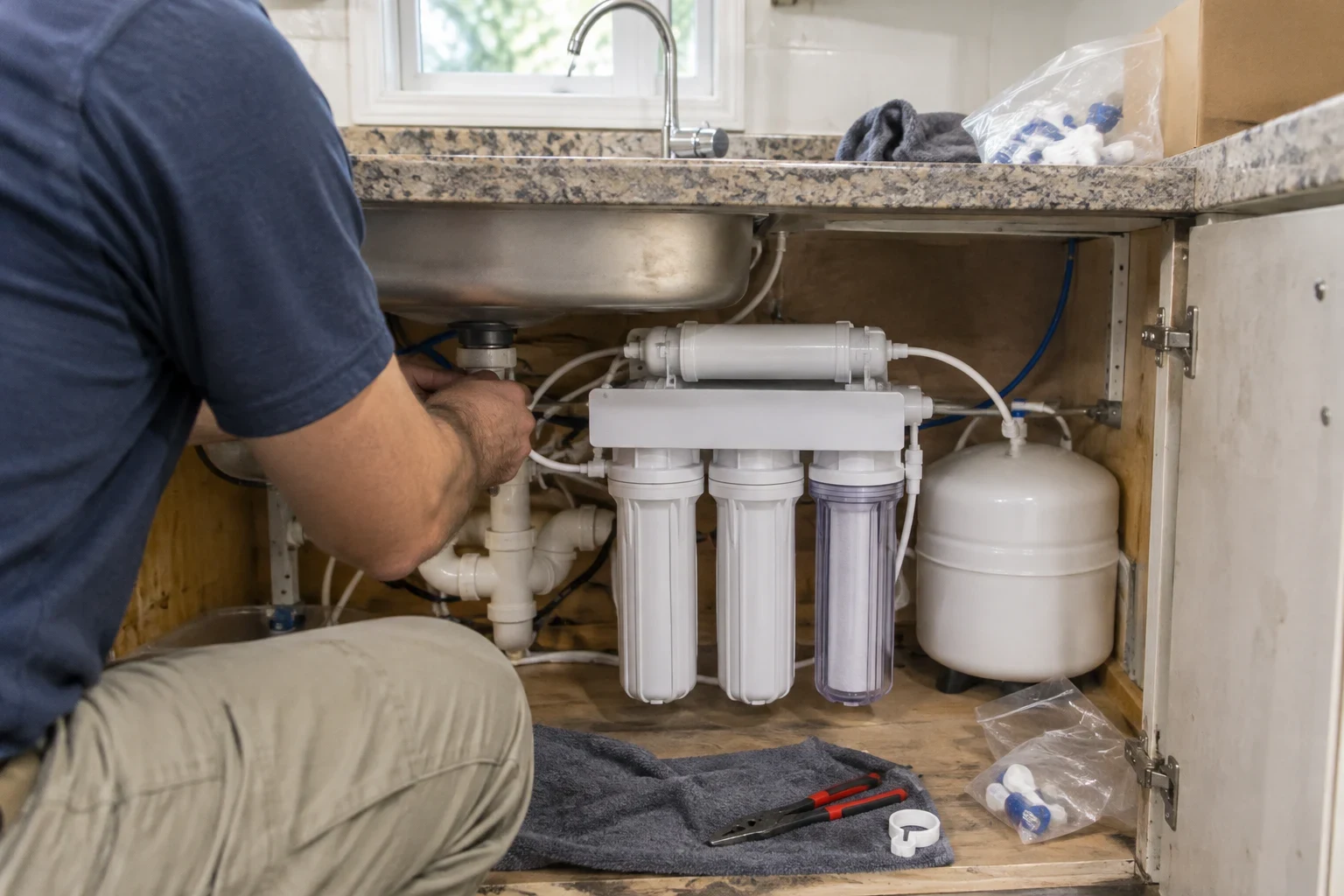
Our under-sink reverse osmosis setups put a separate faucet at your kitchen sink for crisp, clean drinking and cooking water. We give real attention to the drain connection and each fitting, so the unit stays quiet, the cabinet stays dry, and the system keeps working for years.
How Reverse Osmosis Works at Your Sink
Reverse osmosis forces water through an extremely fine membrane that stops dissolved minerals, metals and a long list of trace contaminants. Before that, pre-filters trap sediment and chlorine, and after it, a carbon cartridge smooths out the taste. What reaches your faucet is ready for a glass, the coffee pot or the soup on the stove.
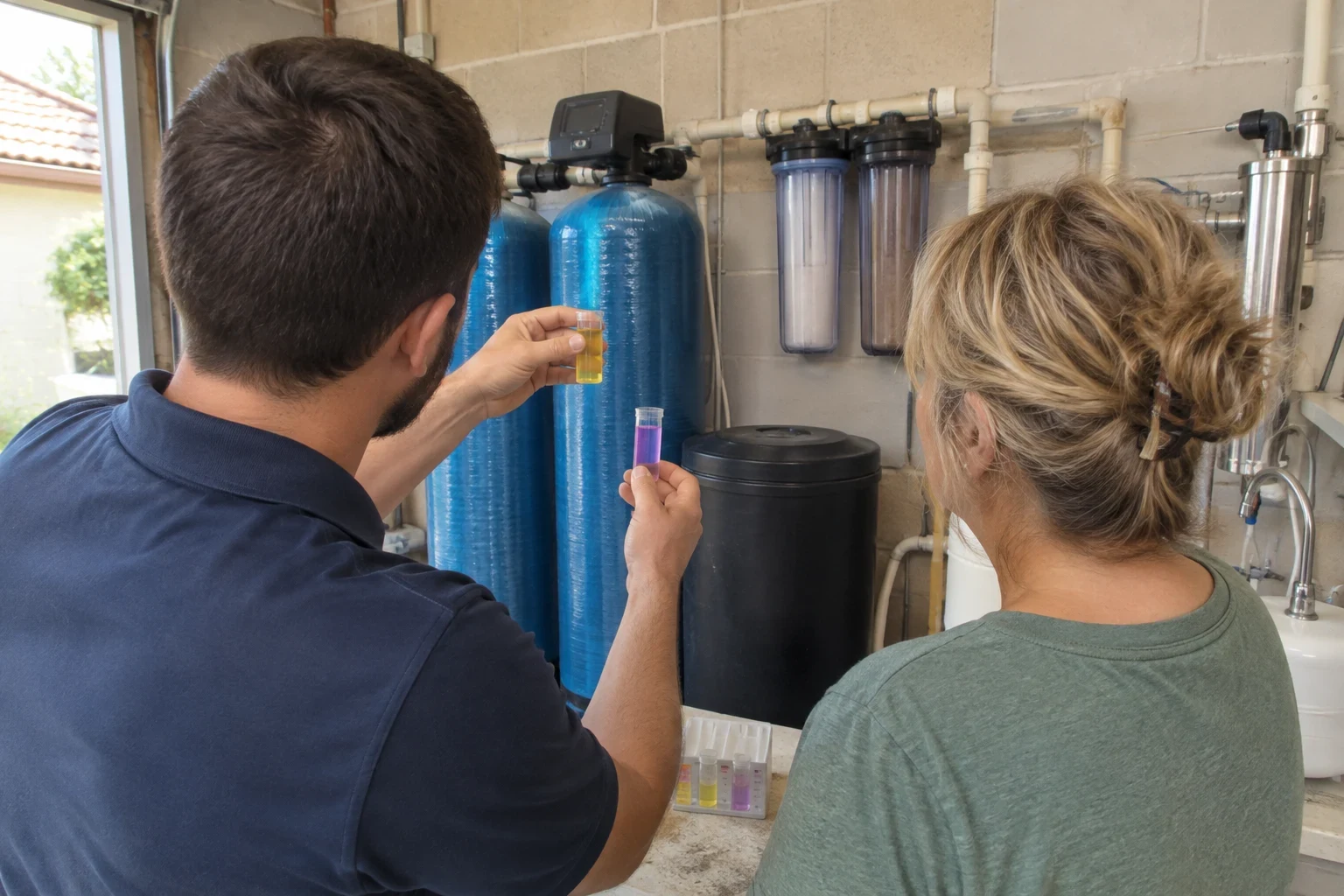
An RO unit serves a single tap, most often in the kitchen. If you notice chlorine taste or smell in the shower and every faucet, start with our whole-home filtration or chlorine and chloramine removal service instead. Plenty of Pinellas Park households use both: house-wide treatment for showers and laundry, and RO for the water they drink.
When an RO system gives trouble, the cause is usually how it was put in, not the membrane itself. A drain line clamped in a poor spot, a tube only half seated, or tubing pinched behind a trash can leads to noise, weak flow or a slow leak. Those are the parts of the job we slow down for.
What We Handle on Every Install
- A drain saddle placed right
- The saddle goes on the drainpipe above the P-trap, angled so the wastewater flows out cleanly. Getting this spot right keeps odors out and stops the gurgle you hear from rushed installs.
- A faucet that stays put
- If your sink already has a spare opening from an old sprayer or soap dispenser, we use it. If not, and you give the go-ahead, we cut a clean new hole. Either way the faucet is tightened down so it never twists in your hand.
- Neat, secure tubing
- We cut each tube square and seat it all the way into the fitting, then route it in smooth curves. Lines stay away from the disposal and from the space you use for cleaning supplies.
- A tank that delivers good flow
- Before the tank fills, we test its air charge, since the wrong pressure means a weak stream at the tap. We set it level and steady inside the cabinet.
- Flushed and checked for drips
- Fresh cartridges and a new membrane need flushing before anyone drinks from them. We flush the system fully, then wipe each joint with a dry paper towel to confirm it is tight.
When an RO System Is a Good Fit
Bottled water keeps piling up
If you are hauling cases home from the store, a tap at your sink ends the lifting, the plastic and the extra errands.
Coffee and tea taste wrong
Chlorine and dissolved minerals dull coffee, tea and even ice cubes. Cleaner water lets the flavor come through.
Your plumbing has some age on it
Older pipes and fittings can pick up metals after the water leaves the utility. RO is a solid choice for the water you drink and cook with.
The fridge filter falls short
A refrigerator cartridge is mostly a taste filter. If you want much finer treatment for drinking water, RO does far more.
Your current unit drips or crawls
An older system that hums nonstop, refills slowly or leaves puddles in the cabinet may need parts or a full swap. Our water softener and filtration system replacement service handles that.
What Shapes the Cost of an RO System
Your price comes down to the system you choose and how much work your kitchen needs to make room for it. On the phone we walk through the parts and the labor so you know what you are paying for. Nothing gets added once we are under the sink without asking you first.
How many filter stages
A simpler unit has fewer stages. Adding a remineralization cartridge or a second carbon polisher raises the cost and gives the water a slightly different taste.
Where the faucet goes
An open hole already in the sink keeps things quick. Granite, quartz and other stone tops need a slower cut with a proper diamond bit, which adds labor.
Your incoming pressure
Weak household pressure can leave you with slow flow and more water sent to the drain. In that case a booster pump goes on the list.
Lines to other fixtures
Feeding the fridge ice maker or a bar sink means more tubing, extra fittings and more time routing the line neatly.
What Happens on Install Day
- 1
A conversation first
On the phone you describe your kitchen, your sink and what you want your water to taste like. We lay out the choices simply and pick a visit time that suits you.
- 2
A close look under the cabinet
Once we arrive, we check the cold supply line, the drain setup, the space you have and your water pressure. If pressure is low enough to slow the system, we bring up a booster pump before any work begins.
- 3
Careful setup
We empty the cabinet and lay down a towel, then install the feed valve, drain saddle, faucet, filter housing and tank. Most jobs wrap up in a few hours.
- 4
Walkthrough and cleanup
After flushing and checking every joint, we fill the first glass with you. We point out the shutoff and explain which cartridges to change and how often, then tidy the cabinet and the kitchen before leaving.
Reverse Osmosis Questions We Hear Most
Does an RO system waste water?
A share of the incoming water rinses across the membrane and carries what it removed out through the drain line. That constant rinse is what keeps the membrane from clogging. Newer units send much less to waste than older designs did, and steady pressure in your home tips the ratio further in your favor, so we check yours while we are there.
How often do the filters and membrane need changing?
The pre-filters and the carbon cartridge are usually changed about once a year. The membrane lasts longer, and how long depends on how much water you pull from the tap. Before we leave, we show you how each cartridge comes out, and we offer ongoing customer support for maintenance, filter replacements, and service needs.
Will it fit under a sink with a garbage disposal?
In most kitchens, yes. We place the tank and filter housing to one side and route every line away from the disposal. If your cabinet is tighter than usual, we tell you right then and show you a layout that still fits.
Can my refrigerator use the RO water too?
Yes. We run a separate line to the fridge dispenser and ice maker with its own shutoff valve. That lets you service the fridge without cutting off your drinking faucet.
Does RO water taste flat?
Some people notice a lighter taste because the membrane strips out dissolved minerals. If you prefer a fuller taste, a remineralizing cartridge adds a small amount of calcium and magnesium back after the membrane. We are happy to talk through both choices on the phone.
Let's Get Your Drinking Water Sorted
Give us a few details about your sink and what bothers you about your water now. We will lay out the choices plainly and find a visit time that fits your week.