ServicesSoftener Repair & Maintenance
Water Softener Repair & Maintenance in Pinellas Park
Spotty dishes and a salt level that sits untouched for weeks usually point to a small, fixable problem. We find the part behind it, repair it with care at every seal and fitting, and set your softener up to keep regenerating on schedule.
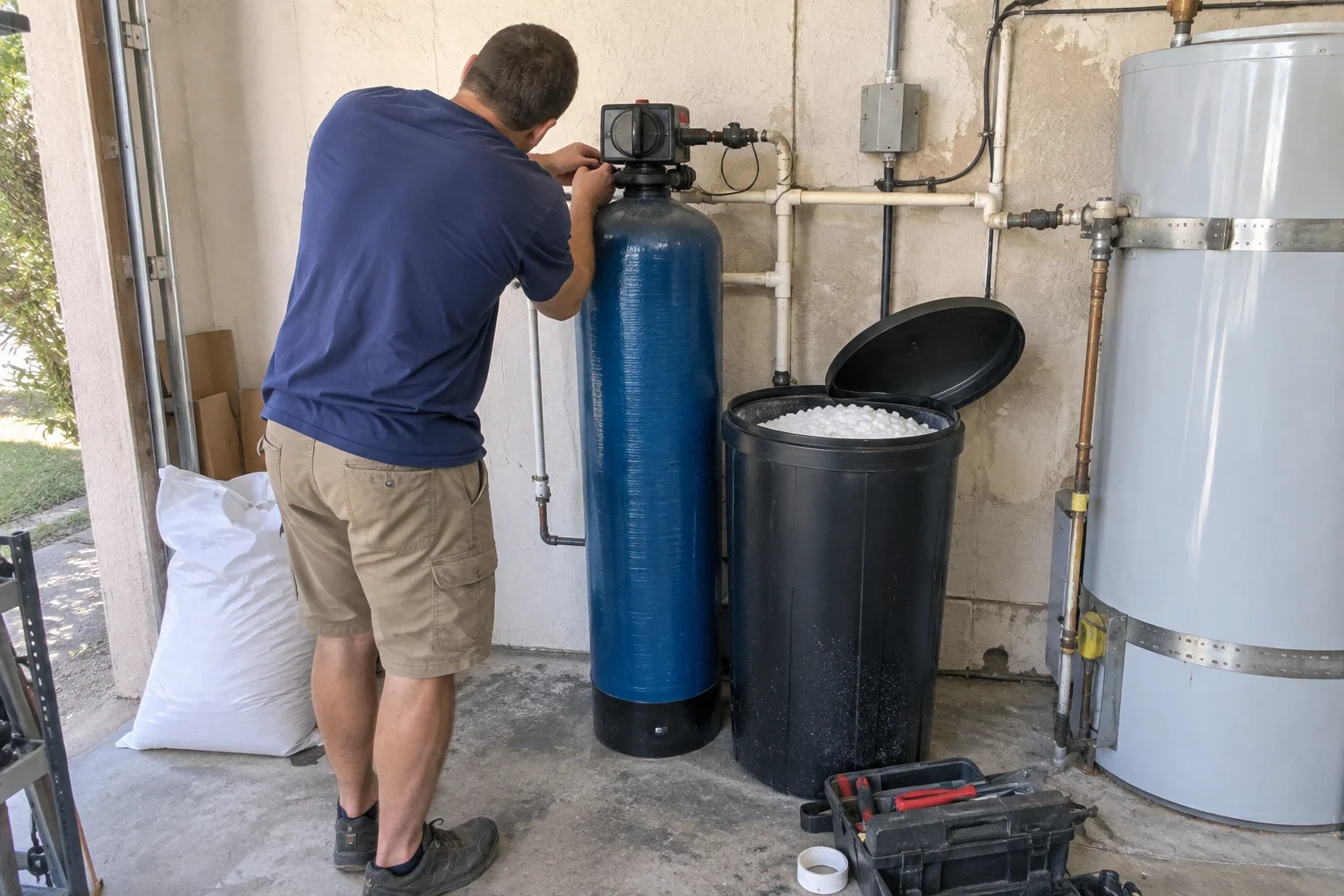
Most softener problems come down to a few small parts
A water softener is a simple machine. A control valve tells it when to regenerate, a brine tank feeds salty water through the resin, and the resin pulls hardness out of the water headed into your home. When one of those pieces drifts out of order, the whole system quietly stops doing its job.
The fix is often small: a cracked brine line, a clogged injector, a worn seal in the valve, or a hard crust of salt sitting above the water in the brine tank. We look at each of those before suggesting anything bigger. If a repair makes sense, we do it carefully, with clean fittings and the settings matched to your household. If it doesn't, we tell you why.
The work we do on a service visit
- Clearing and cleaning the brine tank
- Hardened salt crusts get broken apart, and the mushy layer and sludge at the bottom come out before we rinse the tank clean. Moisture in a garage makes bridging more likely, so we look at the salt you're buying too.
- Injector and brine line service
- The injector is a small nozzle that pulls brine into the resin tank, and a bit of grit is enough to stop it. We take it out, clean its screen and inspect the brine line for cracks or loose fittings.
- Inside the control valve
- We examine the timer or meter, the piston, and the seals and spacers in the valve head. When seals are worn, the unit drains constantly or lets water slip past the resin, so we swap them out instead of only resetting the clock.
- Settings that fit your home
- Hardness, regeneration time and salt dose decide how much salt and water the softener goes through. We adjust them to the number of people in your home rather than leaving the factory numbers in place.
- Drain line and bypass
- We make sure the drain line has a proper air gap and no kinks, and that the bypass valve is all the way in service. A bypass left partly open lets hard water through more often than people expect.
Signs it's time for softener service
Hard-water marks returning
Cloudy film on the shower door, spotted glasses or scaly faucet aerators tell you untreated water is reaching your taps again.
Salt that stays put
When the salt you poured in weeks ago looks the same today, the softener likely isn't pulling brine. Most often a crust has formed over the water or the injector is plugged.
Too much water in the brine tank
Some models normally hold a few inches of water. If yours is half full or higher, the brine valve or float probably needs a look.
Constant draining
Hissing or water flowing to the drain for hours, well past the regeneration cycle, usually means a worn seal or a piston that's sticking inside the valve.
Weak pressure or a salty taste
A drop in pressure across the house can come from broken-down resin or a blocked distributor. Tap water that tastes salty suggests the rinse cycle isn't completing.
How a service visit goes
- 1
A conversation by phone first
You tell us the make if you know it, what you're noticing and when it started. That helps us bring the right seals and parts so the visit isn't wasted.
- 2
We look before we touch anything
We check settings, salt and water level, the bypass and the drain line, then open up the valve and brine side. You'll see what we find and hear what it means.
- 3
Repair with care at every connection
Worn parts get replaced, O-rings get lubricated with the right silicone grease and fittings are snugged without overtightening plastic threads. Those small steps are what keep a repair from leaking a month later.
- 4
We run a regeneration and watch it
We put the unit through a manual cycle and watch it draw brine, backwash and refill. If something is off, we catch it while we're still there.
- 5
Cleanup and a quick walkthrough
We wipe up, take the old parts with us and show you how to check salt and spot trouble early.
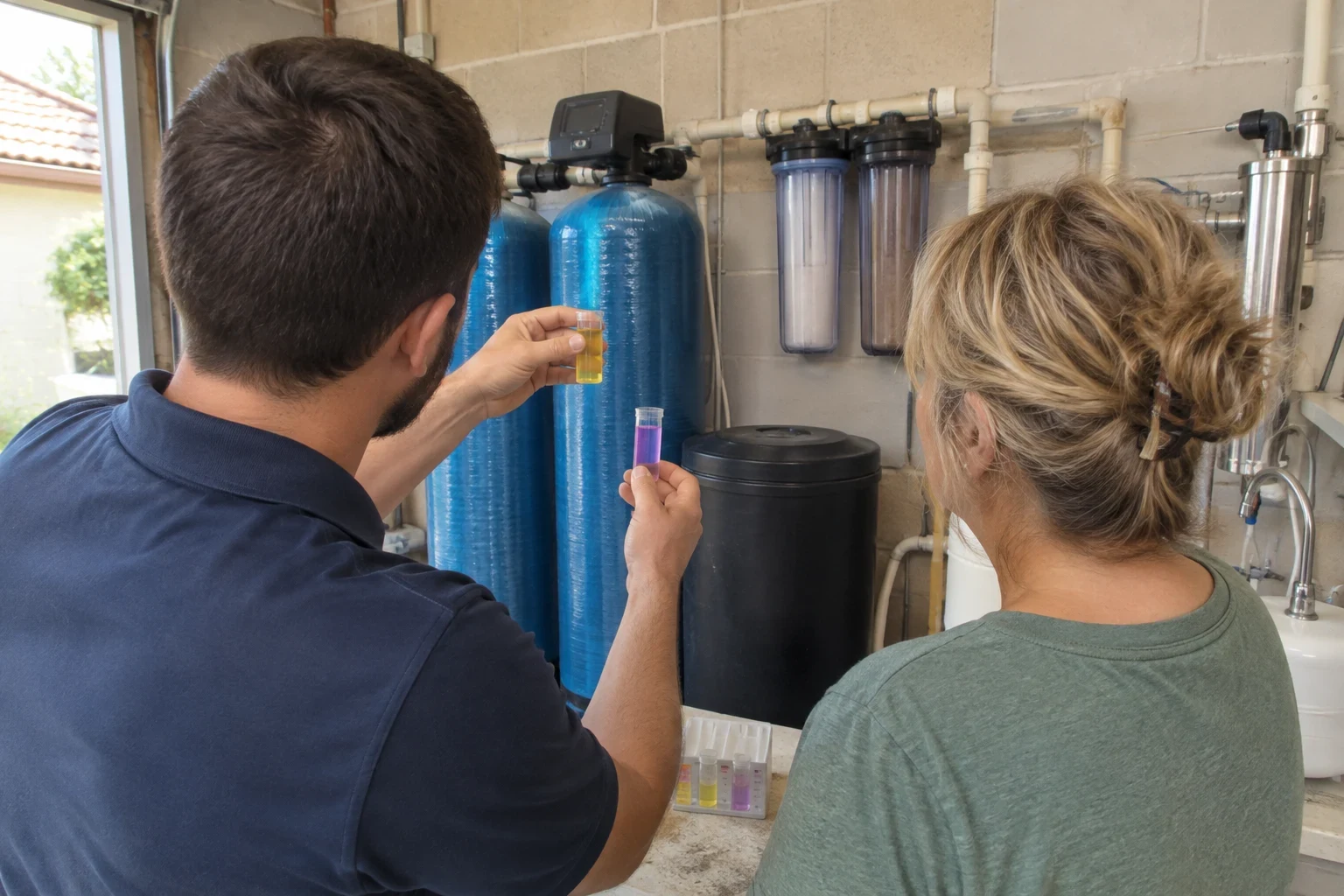
What affects the cost of a repair
Every repair is priced on what your unit actually needs. We explain what we found and what it will take before any work starts, so you can decide with the full picture.
- Which part failed
- Clearing a salt bridge or cleaning an injector is a small job. A new valve head or a full resin replacement is a bigger one.
- Your valve brand and model
- Common valves have seal kits and parts that are easy to find. Older or proprietary units can take longer to source parts for.
- Age and condition of the resin
- Resin wears out over time, and chlorinated city water speeds that up. Tired resin can make a repair less worthwhile than it first appears.
- Access to the unit
- A softener tucked behind a water heater or in a tight closet takes more time to work on than one in an open garage.
Questions homeowners ask about softener service
Something not covered here? (727) 382-3158
How often does a softener need a maintenance visit?
Once a year suits most homes. That visit takes care of the brine tank, the injector and the seals inside the valve. If you run rock salt or keep finding a crust in the tank, a cleanout every six months or so saves trouble.
Should I fix my old softener or replace it?
Repair usually pays off when the tanks are in good shape and parts for the valve are still made. When worn-out resin and a failing valve show up together, a new unit is often the smarter spend. We'll tell you plainly which side your system falls on, and our Water Softener & Filtration System Replacement page covers the replacement route.
Will you service a unit another company put in?
In most cases, yes. Residential softeners tend to share a small number of valve designs, so the parts are familiar. Mention the brand when you phone and we'll say up front if anything might take a few extra days to order.
My softener acted up after the power went out. Why?
A lot of control valves forget the time during an outage. The unit then regenerates in the middle of the day or skips it entirely. After a summer storm, the fix is often just setting the clock and double-checking the cycle settings.
Which kind of salt works best?
Evaporated or solar pellets dissolve cleanly and give far less trouble. Rock salt leaves behind grit that settles as sludge and clogs things over time. Filling only partway up the tank also cuts down on bridging.
Who do I reach when the softener needs something down the road?
You reach us. Ongoing customer support for maintenance, filter replacements, and service needs is part of how we work, so a future salt question or a fresh set of filters is one phone call away.
Get your softener working right again
Tell us what your system is doing and we'll walk through the likely causes with you. If it needs a visit, we'll set one up and bring the parts it probably needs.